What Can Reduce the Resale Value of Investment Gold?
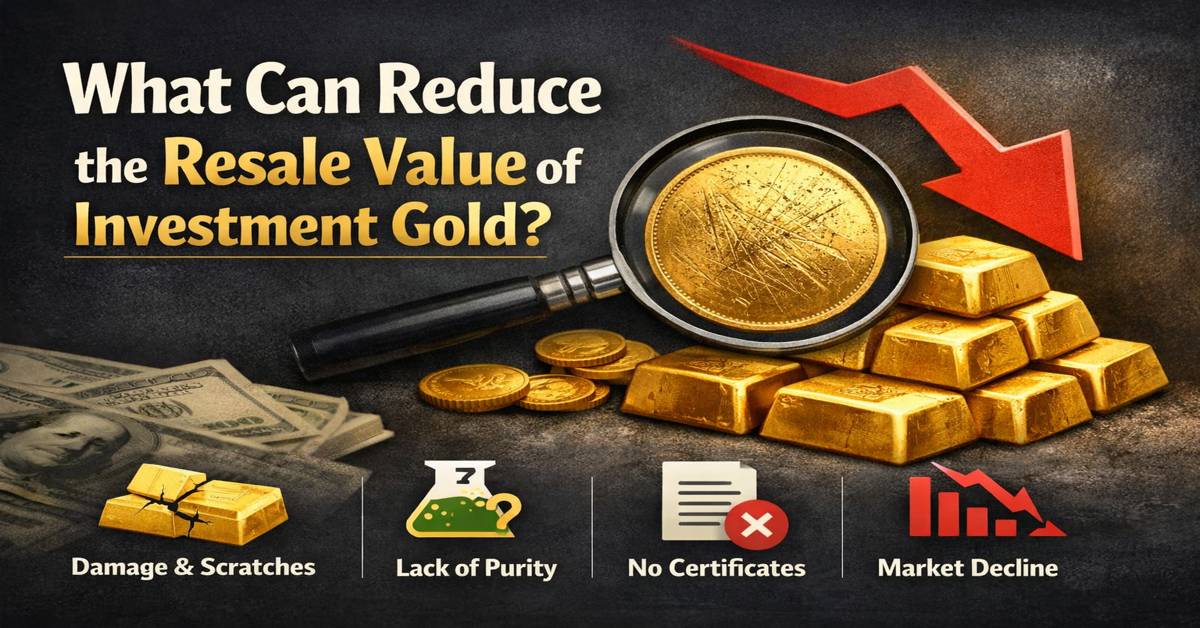
Investment gold is often marketed as “easy to sell anytime.” In practice, the price you get when selling can differ meaningfully from the spot price you see online. This gap is where many investors lose money—not because gold performed poorly, but because of avoidable decisions made at purchase, storage, or sale.
This article focuses strictly on factors that reduce the resale value of investment gold. No basics, no theory—only practical issues that directly affect how much cash you receive when you sell.
1. Buying Very Small Gold Units Repeatedly
One of the most common mistakes is accumulating many small bars or coins instead of fewer larger ones.
Practical example
An investor buys multiple 1-gram gold bars over time. Each bar carries a high premium at purchase. When selling, dealers value only the gold weight, not how many individual bars were bought.
At the place where I buy gold, the premium difference between small and large bars is significant. For 1 g gold bars, the difference between buying and selling price is close to 9%. For 1 oz gold bars, the difference is around 4.3%.
Premium Difference: 1 g Gold Bars vs 1 oz Gold Bars
This example shows the practical impact of premiums when investing the same amount of money into different gold bar sizes. The gold price itself is assumed to remain unchanged.
Assumptions
- Total investment: $10,000
- Gold price does not change
- Buy–sell price difference (premium loss):
- 1 g gold bars: approximately 9%
- 1 oz gold bars: approximately 4.3%
Scenario 1: $10,000 Invested in 1 g Gold Bars
With a buy–sell difference of around 9%, the effective value when selling is:
$10,000 × (1 − 0.09) = $9,100
Loss caused by premium: $900
Scenario 2: $10,000 Invested in 1 oz Gold Bars
With a buy–sell difference of around 4.3%, the effective value when selling is:
$10,000 × (1 − 0.043) = $9,570
Loss caused by premium: $430
Direct Comparison
| Gold Form | Premium Loss | Value After Selling |
|---|---|---|
| 1 g bars | $900 | $9,100 |
| 1 oz bars | $430 | $9,570 |
Conclusion: Choosing 1 oz gold bars instead of 1 g bars preserves approximately $470 more from a $10,000 investment—even if the gold price does not increase at all. This difference comes solely from premiums.
In contrast, larger bars (such as 10 g or 1 oz) typically carry lower premiums and lose less value at resale.
Why resale value suffers
- Dealers don’t pay extra for how many bars you own
- Small units have weaker secondary demand
- Some dealers buy small bars only at melt value
Resale impact: You may need a much higher gold price just to break even.
In contrast, a single 10-gram bar typically has a much lower premium. When resold, the percentage loss relative to spot is smaller.
Why resale value suffers
- Dealers don’t pay extra for how many bars you own
- Small units have weak secondary demand
- Some dealers buy small bars only at melt value
Resale impact: You may need a much higher gold price just to break even.
2. Damaged or Opened Packaging
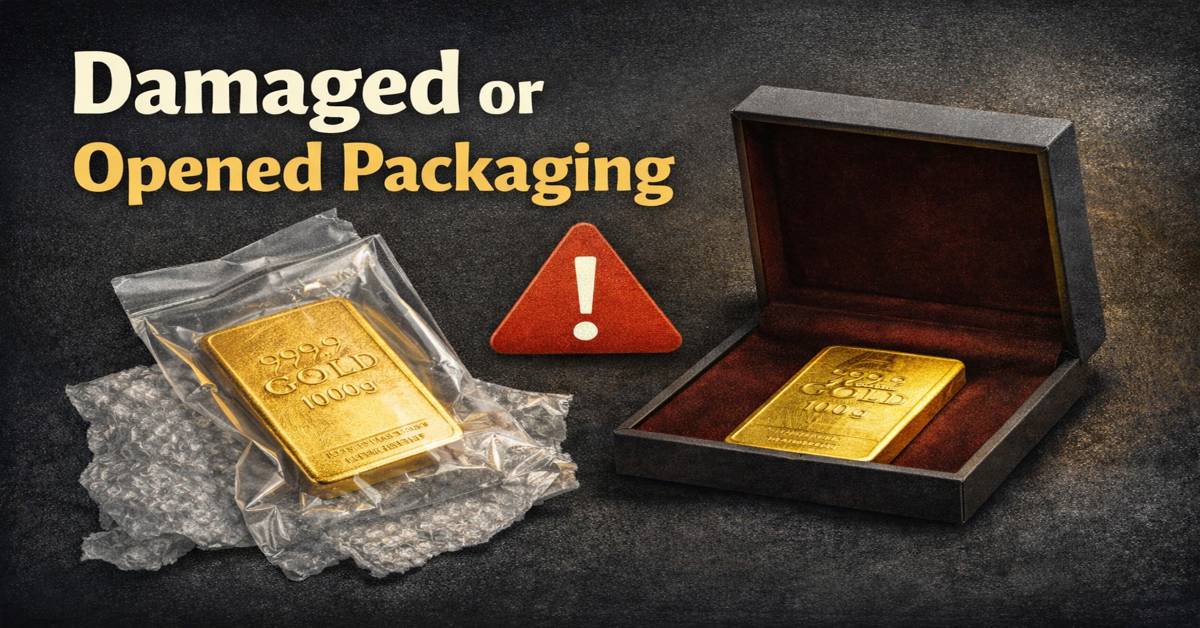
Modern investment gold bars often come sealed in tamper-evident packaging with a serial number. Opening or damaging this packaging directly affects resale conditions.
Practical example
An investor opens a 50-gram bar “just to see it.” When selling later, the dealer requires an assay test or offers a discounted price because the bar is no longer sealed.
Common resale consequences
- Mandatory verification or melting
- Additional testing fees
- Lower dealer offer due to risk
Resale impact: Even though the gold is still pure, trust is reduced—and trust has a price.
3. Missing Purchase Documentation
While gold itself doesn’t need a receipt to exist, buyers often need paperwork to buy it from you smoothly.
Practical example
You bought gold privately or years ago and no longer have invoices. When selling, a dealer flags the transaction for additional checks or limits the amount they are willing to buy.
Why this matters
- Anti-money-laundering rules apply
- Some dealers refuse undocumented gold
- Private buyers may avoid the deal entirely
Resale impact: Fewer buyers means weaker pricing power.
4. Buying Non-Standard or Low-Liquidity Products
Not all gold products are equally liquid. Some bars and coins are technically investment gold but practically difficult to resell.
Examples of problematic products
- Obscure refineries with no LBMA recognition
- Limited-edition commemorative bars
- Gold embedded in frames or jewelry-style formats
Practical example
A decorative gold bar with a certificate looks attractive at purchase. At resale, dealers treat it as scrap gold because they don’t recognize the brand.
Resale impact: You receive melt value only, regardless of original price.
5. Dealer Buyback Spreads
The difference between dealer sell price and buyback price is one of the biggest hidden costs in gold investing.
Practical example
You buy gold at spot +6%. Two years later, the dealer buys it back at spot −4%. Even if gold rose 5%, you are still at a loss.
Why spreads vary
- Market volatility
- Product type
- Dealer inventory needs
Resale impact: Wide spreads quietly eat returns, especially over short holding periods.
Tools like a gold ROI calculator can help estimate how spreads affect your real outcome without relying on assumptions.
6. Selling at the Wrong Time of Market Stress
Gold is liquid—but not always liquid at fair prices.
Practical example
During a sudden market crash, many investors rush to sell gold for cash. Dealers widen spreads or temporarily suspend buybacks.
What happens then
- Lower buyback prices
- Transaction limits
- Long settlement delays
Resale impact: Forced selling reduces leverage over price.
7. Poor Storage and Physical Damage
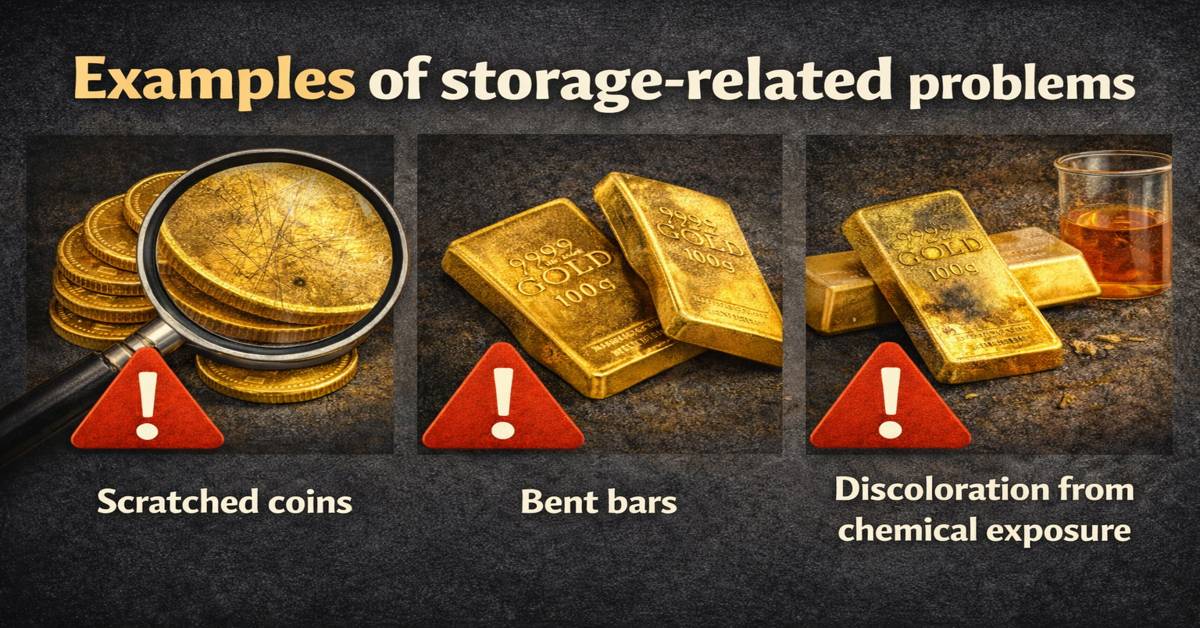
Gold doesn’t rust, but storage still matters.
Examples of storage-related problems
- Scratched coins
- Bent bars
- Discoloration from chemical exposure
Practical example
A gold coin stored loose in a drawer loses its mint condition. Collectible premium disappears, leaving only bullion value.
Resale impact: Condition affects buyer perception and offer price.
8. Mixing Investment Gold With Collectibles
Many investors unintentionally blur the line between bullion and collectibles.
Why this hurts resale
- Collector premiums are subjective
- Dealer demand is inconsistent
- Market for collectibles is narrower
Practical example
You paid extra for a “special edition” coin. At resale, the dealer values only the gold content.
Resale impact: Extra paid at purchase rarely comes back.
9. Selling Through the Wrong Channel
Where you sell matters as much as what you sell.
Comparison
- Local pawn shop: Fast, lowest price
- Online dealer: Better price, shipping risk
- Private sale: Best price, highest effort
Practical example
An investor sells gold urgently at a pawn shop for 8% below spot. The same gold sold online would fetch spot minus 2–3%.
Resale impact: Convenience costs money.
10. Ignoring Total Return, Focusing Only on Spot Price
Many investors track gold price but ignore transaction friction.
What’s often overlooked
- Premiums paid
- Storage fees
- Verification costs
- Resale spread
Using tools that model actual buy-and-sell scenarios—such as a gold ROI calculator—helps expose how these factors reduce realized returns.
Common Limits Investors Don’t Anticipate
- Dealers may cap daily buyback amounts
- Large sales can trigger reporting requirements
- Some products are buyback-eligible only at original dealer
These limits don’t destroy value directly, but they reduce flexibility—often at the worst time.
Conclusion
Gold itself rarely fails investors. Execution does. The resale value of investment gold is reduced not by market myths, but by concrete, avoidable decisions:
- Buying inefficient sizes
- Damaging packaging
- Ignoring spreads and liquidity
- Selling under pressure or through poor channels
Thinking about resale before you buy changes everything. Gold rewards discipline, not impulse. Treat it like a financial instrument—not a souvenir—and its resale value will reflect that.
Related:
- Gold or Silver: Which Is Better for Long-Term Investors?
- What Investment Gold Looks Like in Practice?
About the Author
I am a software developer focused on building financial modeling tools and investment simulations that help long-term investors understand compounding, market cycles, and portfolio behavior.
I created PortfolioCalc to explore how contribution timing, return sequences, and different asset classes impact long-term wealth outcomes. The calculators and examples on this site are based on quantitative modeling and scenario analysis.
In addition to developing these tools, I personally invest in diversified ETFs, gold, and Bitcoin using a long-term, data-driven approach. While I am not a licensed financial advisor, the content on this site is designed to translate financial mathematics into practical, educational insights.