5 Years to Retirement: How to Assess and Grow Your Portfolio
Plan your retirement portfolio now with our Financial Portfolio Calculator
Reaching retirement is one of the biggest milestones in life, and being financially prepared is essential. It’s the time when we envision a peaceful life without money worries. Although it’s ideal to start planning early, it’s never too late to begin, even if you’re just five years away from retirement.
Retirement brings exciting opportunities, but it also requires critical financial decisions. Your portfolio’s health in the final five years can significantly impact your retirement lifestyle. With the right strategy, you can balance growth and safety, ensuring that your savings support the life you want after leaving the workforce.
In this article, we’ll guide you through evaluating your portfolio, managing risk, and projecting growth over the next five years. Plus, we’ll introduce a simple tool to help you plan effectively.
Why Your Portfolio Matters 5 Years Before Retirement
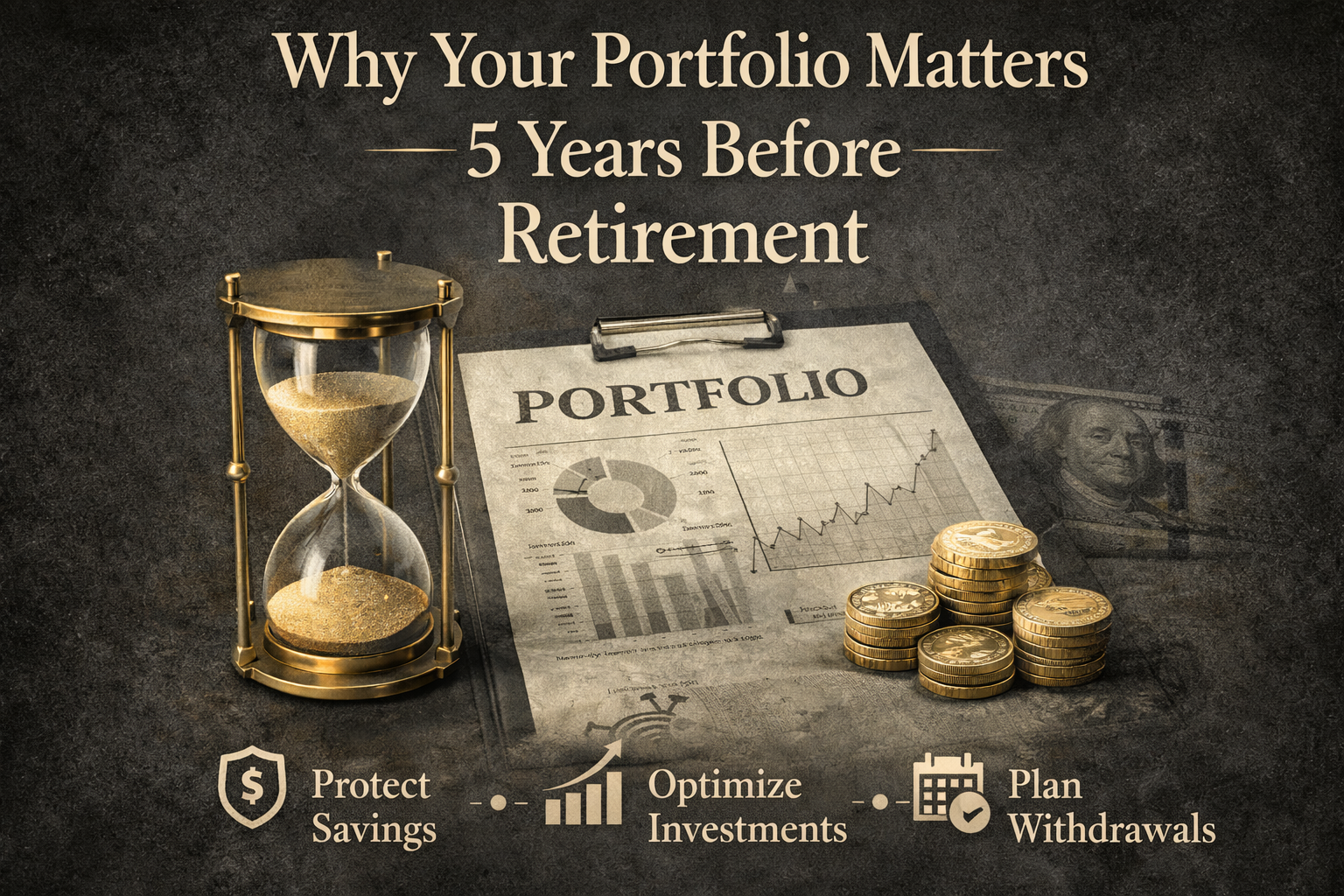
The closer you are to retirement, the less time you have to recover from market downturns. Portfolio strategy shifts as retirement approaches. While long-term investors can tolerate volatility for growth, those just five years away from retirement need a careful balance of:
- Growth: Investments must continue to grow to cover inflation and future expenses.
- Capital preservation: Protecting your savings from sudden losses is crucial.
- Income planning: Consider how you’ll generate income after retirement.
Ignoring these factors can leave you unprepared, especially if unexpected market corrections occur.
Assessing Your Current Portfolio
The first step is a thorough assessment of your current holdings. Key areas to review include:
- Asset Allocation: Are you heavily invested in stocks, bonds, or alternative assets? A typical five-year-to-retirement portfolio may shift toward more bonds and less volatile assets to reduce risk.
- Investment Performance: Review your funds’ performance over the last 3–5 years. Past performance doesn’t guarantee future results, but it shows consistency and risk management.
- Contribution Rates: Evaluate whether your annual contributions are sufficient to meet your retirement goals.
- Withdrawal Strategy: Plan how much income you will need and how withdrawals will impact your portfolio. Withdrawing too early or too aggressively can deplete your funds faster than expected.
Managing Risk in the Final Five Years
As you approach retirement, risk management becomes critical. Here are strategies to consider:
1. Diversify Your Portfolio
Spread investments across multiple asset classes, such as domestic and international stocks, bonds, real estate, or cash equivalents. Diversification reduces the impact of a single underperforming asset.
2. Consider Lower Volatility Assets
Shifting part of your investments into lower-risk assets like bonds, CDs, or treasury securities can protect your portfolio from sudden market swings and help preserve capital.
3. Adjust Equity Exposure Gradually
Many advisors suggest gradually reducing stock exposure as retirement nears. The “age in bonds” rule is common — for example, if you’re 60, aim for roughly 60% in bonds and 40% in stocks. This gradual shift balances growth potential with reduced risk.
Projecting Portfolio Growth Over 5 Years
While exact performance is uncertain, you can make informed estimates using historical data:
- Set realistic return assumptions: Historically, a balanced portfolio may grow 4–7% annually.
- Factor in annual contributions: Even small additional investments can compound significantly over five years.
- Include taxes and fees: Management fees, trading costs, and taxes reduce net growth, so consider them in your projections.
These factors help calculate a potential range for your portfolio value at retirement, making it easier to adjust your plan if needed.
How a Retirement Portfolio Calculator Can Help
A retirement portfolio calculator allows you to input your current balance, annual contributions, and expected returns to see how your portfolio may grow over the next five years. Our Financial Portfolio Calculator lets you:
- Compare multiple assets side by side
- Adjust investment assumptions
- Calculate projected profit and total portfolio value
Example Scenario
Suppose you have $200,000 invested in a diversified portfolio and plan to contribute $10,000 per year. Using historical growth rates, a retirement portfolio calculator can estimate that in five years, your portfolio could grow to approximately $357,000–$380,000, depending on market conditions.
Check the projection for a 8% annual growth below:
| Year | Start Amount | Annual Investment | Profit per Year | Total |
|---|---|---|---|---|
| 1 | 200,000.00 | 10,000.00 | 16,800.00 | 226,800.00 |
| 2 | 226,800.00 | 10,000.00 | 18,944.00 | 255,744.00 |
| 3 | 255,744.00 | 10,000.00 | 21,259.52 | 287,003.52 |
| 4 | 287,003.52 | 10,000.00 | 23,760.28 | 320,763.80 |
| 5 | 320,763.80 | 10,000.00 | 26,461.10 | 357,224.91 |
Additional Tips for a Strong Portfolio
- Stay consistent: Regular contributions, even in small amounts, help your portfolio grow steadily.
- Rebalance periodically: Review your asset allocation at least once a year to maintain your desired risk level.
- Plan for emergencies: Keep a small portion in liquid cash to avoid selling investments at a loss during market downturns.
- Consider professional advice: A financial advisor can help refine your strategy, especially for tax planning and estate considerations.
Conclusion
Being five years away from retirement is the perfect time to evaluate, adjust, and plan your portfolio. By focusing on risk management, asset allocation, and projected growth, you can increase the likelihood of achieving your retirement goals.