Psychology of Investing During Negative Returns
Have you ever invested money? Do you remember how it felt the first time you saw your investment go down instead of up? The psychology of investing becomes especially challenging during periods when asset prices are falling. In those moments, many investors feel a strong temptation to withdraw their money and “stop the damage.”
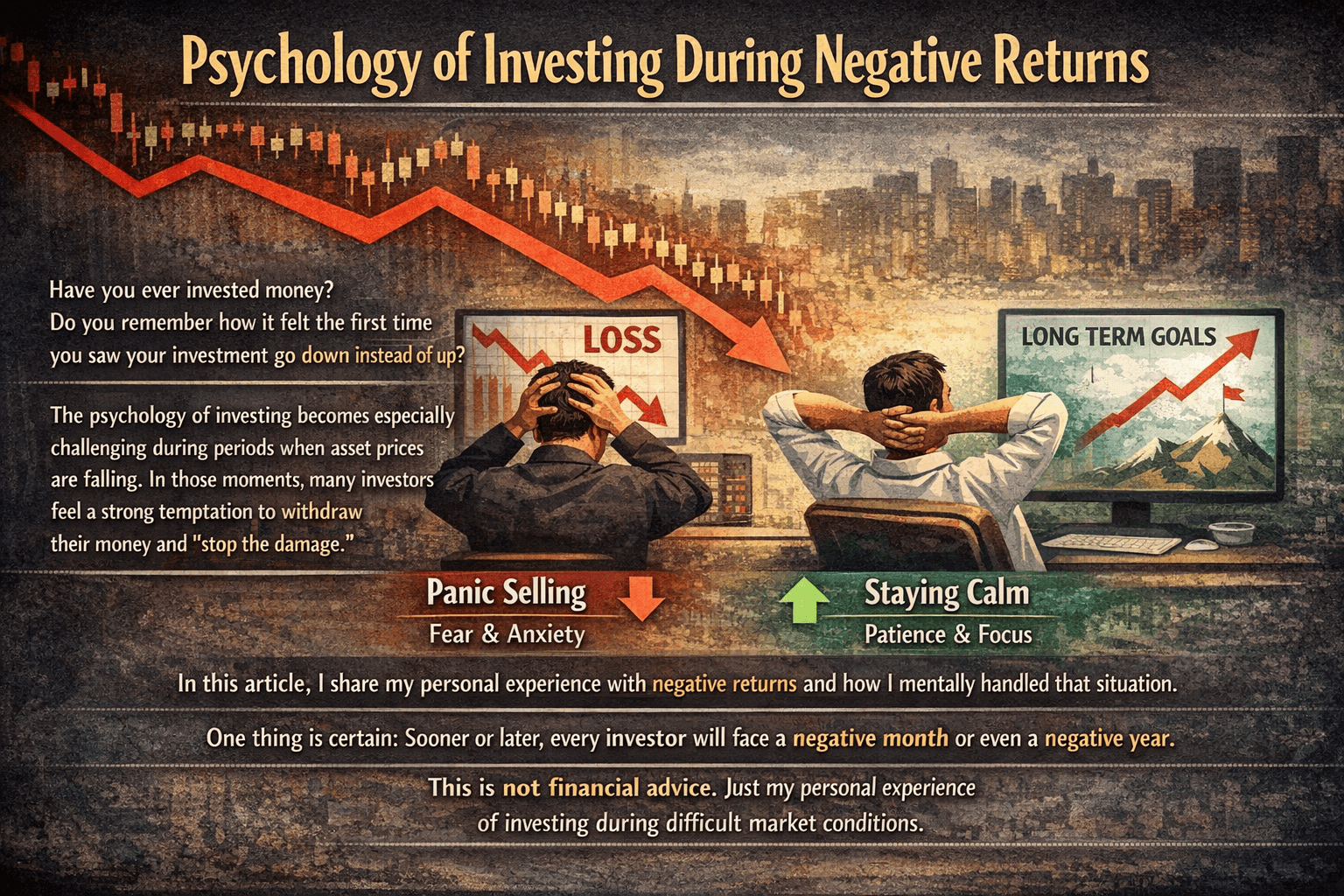
In this article, I share my personal experience with negative returns and how I mentally handled that situation. One thing is certain: sooner or later, every investor will face a negative month or even a negative year. When that happens, people react very differently. Some act impulsively, while others manage to stay calm and focus on the long-term picture.
This article is not financial advice. It is simply my personal experience and an honest attempt to describe what it feels like to invest during difficult market conditions.
Why Negative Returns Trigger Panic in Investors
At the beginning of 2025, I started investing larger amounts of money into the S&P 500 index. My decision was based on historical data showing that the long-term nominal return of the index has been around 10% per year.
Looking at the data, it seemed like a solid long-term investment, so I decided to commit a significant amount of my savings.
About three months later, in April, the President of the United States introduced new tariffs on foreign goods. This decision had a noticeable impact on the market and on the ETF in which I had invested my hard-earned money.
Stock prices began to fall sharply, and I found myself checking market movements every single day.
Over the next month, the index continued to decline week after week. At one point, my investment was down roughly 20–25%. Watching those numbers was extremely uncomfortable, and being that deep in the red was mentally exhausting. I would be lying if I said the thought of pulling my money out and transferring it back to my bank account never crossed my mind.
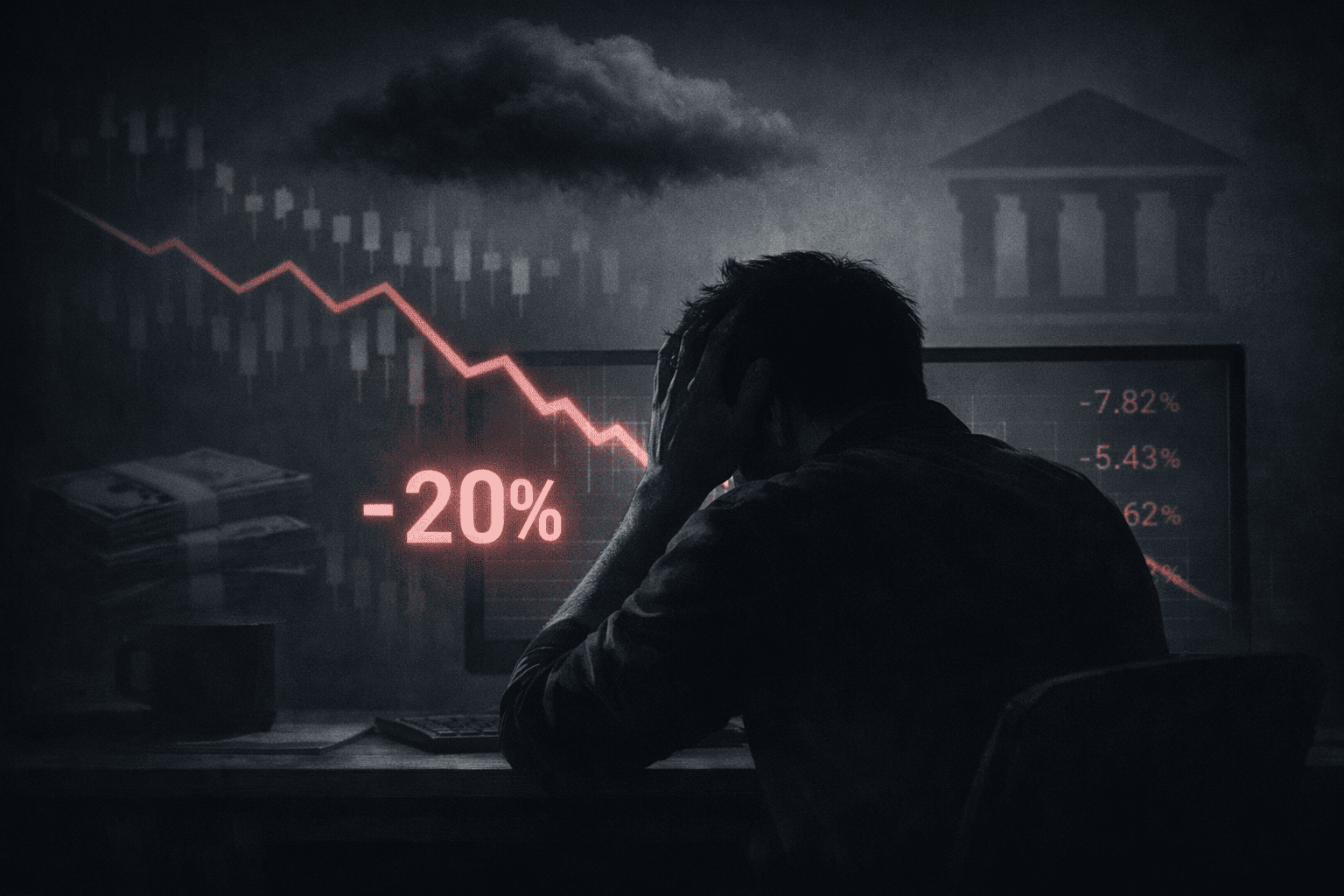
There was constant nervousness and a low-level panic about what the “right” move should be. Because I was checking my brokerage account daily, it started to affect my focus, my mood, and even my productivity.
In the end, I decided to stick with my original long-term plan. That decision paid off. After a few months, stock prices recovered and returned to their previous levels. The index even finished the year in positive territory. However, since I invested in euros rather than dollars, my personal return was limited because the dollar weakened against the euro.
Common Emotional Investing Mistakes During Market Downturns
One of the most helpful changes I made was deliberately stopping myself from checking the index every day. Instead, I limited myself to reviewing performance once a week, usually toward the end of the workweek. This helped me stay focused on my job, which requires a high level of concentration.
At first, this was harder than it sounds. I had to consciously resist the urge to open my brokerage app. After a few weeks, however, it became a habit—and the stress noticeably decreased.
I believe that investing decisions are similar to decisions in my professional work as a software developer. Emotions can easily lead to poor outcomes. Decisions made under pressure, fear, or stress are often rushed and wrong. Good decisions require distance, patience, and a clear head.
Loss Aversion and Short-Term Thinking in Investing
From the very beginning, I approached investing as a long-term commitment. I had no intention of touching that money for at least 15–20 years. My goal was simple: to reach retirement with financial stability built through consistent saving and investing.
Keeping that long-term vision in mind made it much easier to stay invested during difficult periods. When you truly believe in a long-term plan, short-term losses feel less threatening, even though they are still uncomfortable.
Why Selling During Losses Feels “Right” to Investors
Watching the value of your portfolio shrink is never easy. When balances drop, the idea of selling and preventing further losses can feel like the smartest and safest option. This is the exact moment when emotional discipline matters most.
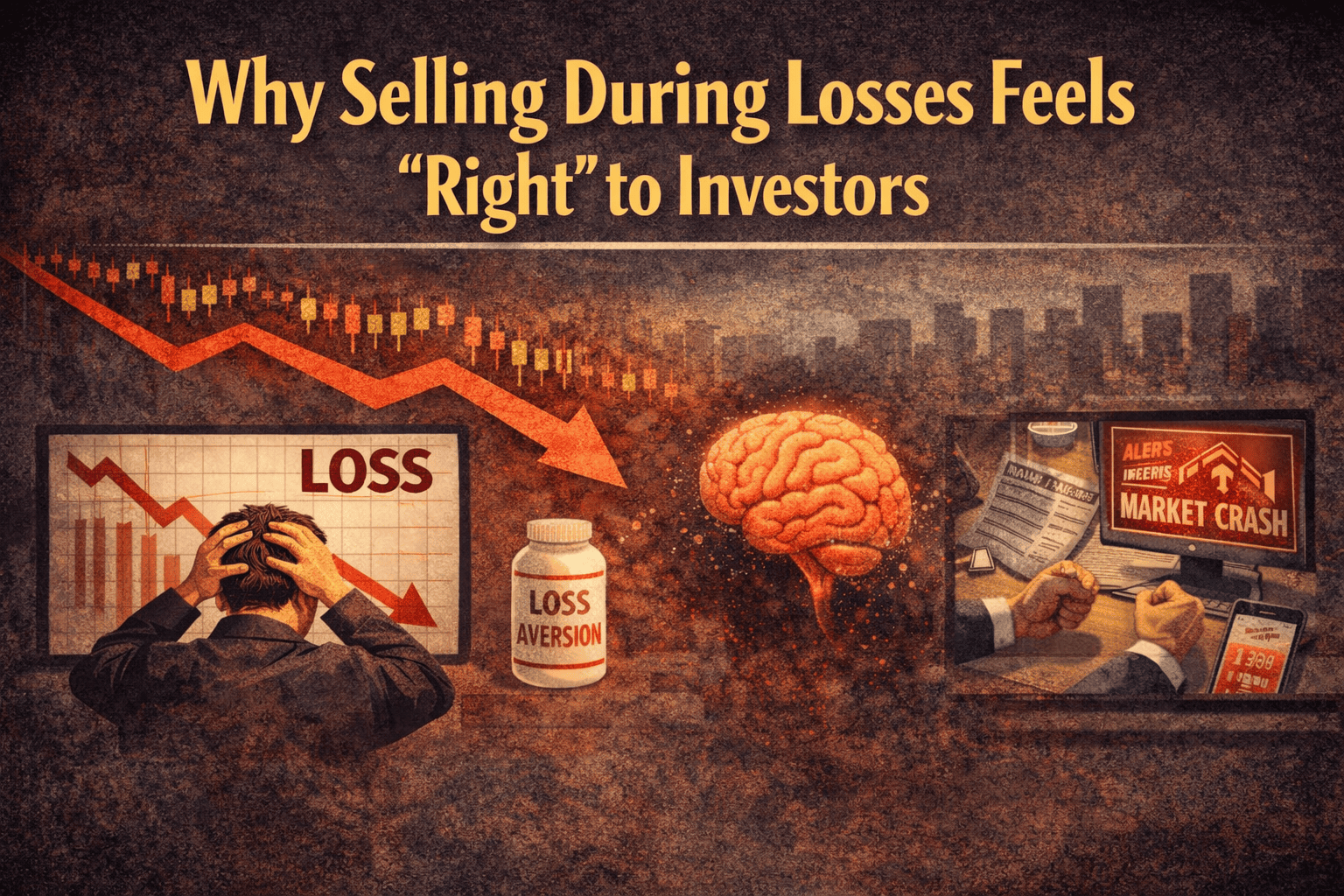
Selling during losses often feels logical because the brain interprets falling prices as danger. This triggers a natural fight-or-flight response. Losses hurt more than gains feel good—a psychological bias known as loss aversion. The desire to stop emotional pain often outweighs rational long-term thinking.
There is also the illusion of control. Selling creates the feeling that you are actively doing something to protect yourself. In reality, markets rarely reward emotional decisions. Constant exposure to negative headlines and red numbers reinforces fear and makes selling feel responsible, even when it isn’t.
How Long-Term Market Data Contradicts Investor Emotions
Having a long-term plan makes it much easier to resist emotional pressure during market downturns. Indexes like the S&P 500 have a history spanning roughly a century. While past performance is never a guarantee, long-term data shows a high probability of positive outcomes for investors who stay consistent.
There have been difficult periods, such as the so-called “lost decade,” when stock prices remained flat for nearly ten years. Even so, looking at the worst 20-year period—from 1929 to 1948—annual nominal returns were still positive at around 0.5–1%.
When inflation is taken into account, there were periods such as the mid-1960s to the 1980s where real returns were close to zero or slightly negative. These examples show that there are no guarantees—but also that patience has historically been rewarded more often than panic.
How Portfolio Calculators Help Remove Emotion From Investing
One practical way to reduce emotional decision-making is by using a portfolio calculator. Tools like this allow you to analyze multiple assets at once while factoring in historical average growth rates. Instead of reacting emotionally to short-term fluctuations, you can focus on long-term trends and projected outcomes.
Seeing the numbers over a longer horizon helps put temporary losses into perspective and reinforces disciplined investing.
Example portfolio calculation:You can view a sample long-term portfolio simulation including the S&P 500, NASDAQ-100, and Gold using this calculator
This kind of visualization helps shift focus away from short-term losses and toward long-term outcomes based on historical data.
Key Takeaways on Investing Psychology and Negative Returns
- Negative returns are a normal and unavoidable part of long-term investing.
- Emotional reactions such as fear and panic often push investors toward poor decisions.
- Loss aversion makes selling during downturns feel “right,” even when it is not optimal.
- Limiting how often you check your portfolio can significantly reduce stress and anxiety.
- A clear long-term plan helps counter short-term emotional pressure.
- Historical data shows that patience has generally been rewarded more often than panic.
- Using portfolio calculators and long-term projections can help remove emotion from decision-making.
Staying disciplined during difficult periods is not easy, but it is often the key difference between long-term success and costly mistakes.
Frequently Asked Questions About Investing During Negative Returns
Is it normal to experience negative returns when investing?
Yes, negative returns are a normal and unavoidable part of long-term investing. Even broad market indexes experience temporary declines, corrections, and bear markets.
Why do investors panic during market downturns?
Investors panic during downturns due to loss aversion and emotional biases that make losses feel more painful than gains feel rewarding.
Should I sell my investments during negative returns?
Selling during negative returns often locks in losses. Long-term data shows that staying invested has historically produced better outcomes than emotional selling.
How can I avoid emotional investing decisions?
Limiting how often you check your portfolio, focusing on long-term goals, and using portfolio calculators can help reduce emotional decision-making.